
The maritime artificial intelligence market is reaching a valuation of $8.78 billion in 2026, signaling a permanent shift from traditional appraisal methods to data-driven precision. It’s no longer enough to rely on surface-level inspections when information asymmetry and hidden technical debt can compromise an entire portfolio. Most institutional investors recognize that the complexity of maritime regulatory changes, including the latest IMO mandates on fire safety and container tracking, requires a more sophisticated approach. This guide masters the framework for technological due diligence in shipping investments, offering a clear path to mitigate risk and secure high-yield maritime assets.
You need a system that bridges the gap between physical asset integrity and digital governance. We’ll explore how automated tools like ShipCheckAI and EU-regulated financial structures create a unified ecosystem for capital. By the end of this guide, you’ll understand how to evaluate vessel performance, ensure regulatory compliance, and leverage technological advancements to protect your asset-backed bonds. We’re moving from the broad vision of maritime finance to the practical, systematic details of technical risk assessment to ensure your capital is governed by transparency and structural integrity.
Key Takeaways
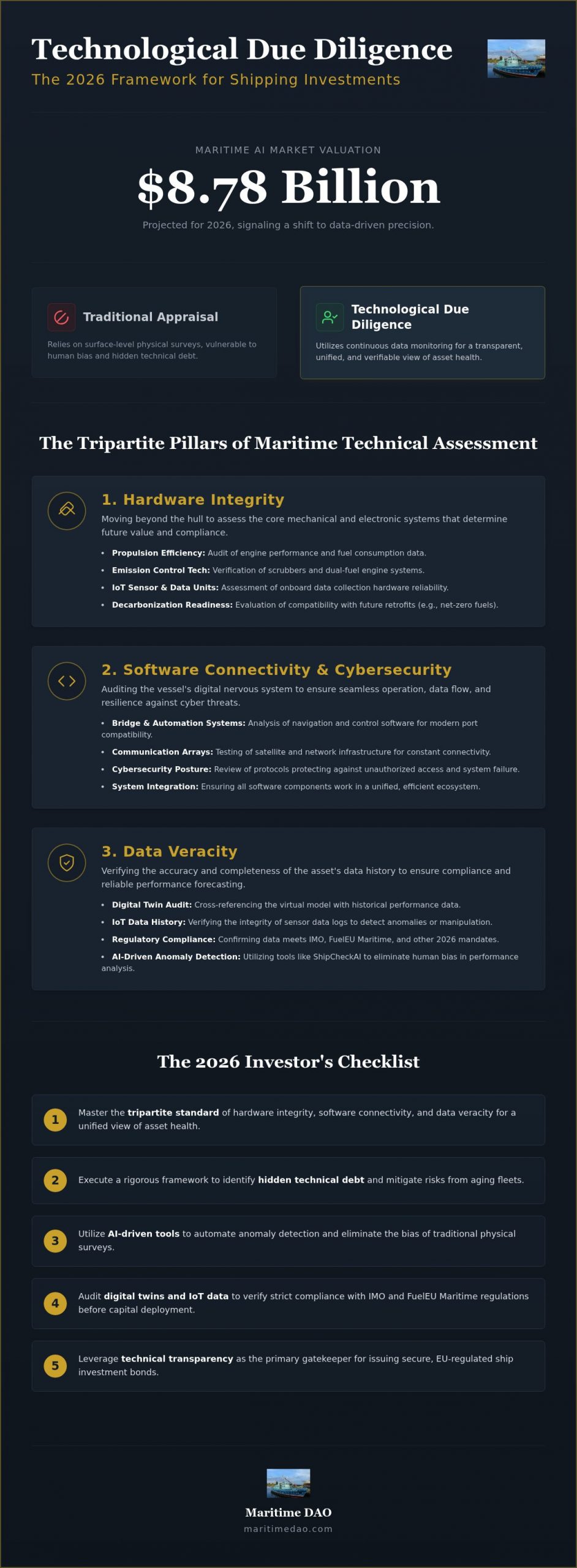
- Master the 2026 tripartite standard of hardware integrity, software connectivity, and data veracity to achieve a unified, transparent view of maritime asset health.
- Execute a rigorous framework for technological due diligence in shipping investments to identify hidden technical debt and mitigate the risks associated with aging fleets.
- Utilize AI-driven tools like ShipCheckAI to automate anomaly detection in engine performance and eliminate the human bias inherent in traditional physical surveys.
- Audit digital twins and IoT data histories to verify strict compliance with current IMO and FuelEU Maritime regulations before capital deployment.
- Secure institutional-grade returns by leveraging technical transparency as the primary gatekeeper for issuing EU-regulated ship investment bonds.
What is Technological Due Diligence in Shipping Investments?
Technological due diligence is the systematic, technical evaluation of a vessel’s hardware, software, and data infrastructure to determine its long-term operational viability. It represents a departure from the purely mechanical assessments of the past; it’s a deep audit of the digital nervous system that governs modern maritime assets. To understand why this is critical, one must first consider the broader financial context of What is Due Diligence? as a foundational risk-mitigation tool. In the maritime sector, this process ensures that an asset’s technological architecture can support its projected commercial returns without succumbing to hidden obsolescence.
Traditional physical surveys are no longer sufficient for institutional-grade investments in 2026. A simple “snapshot” inspection cannot capture the nuances of a vessel’s algorithmic performance or its real-time carbon intensity. Modern technological due diligence in shipping investments utilizes continuous data-driven monitoring to provide a transparent view of asset health. This level of technical transparency is the primary gatekeeper for securing EU regulated ship investment bonds, where institutional capital demands a unified and verified record of asset performance before deployment.
The Evolution from Physical Surveys to Digital Due Diligence
The maritime industry has moved beyond 20th-century manual checklists. Today, AI-augmented assessments allow investors to identify “technical debt” that remains invisible to the naked eye. This debt often manifests as outdated navigation systems that cannot interface with modern port automation or propulsion units that lack the sensors required for new 2026 IMO reporting mandates. Institutional investors now demand a digital twin of the asset before capital deployment. This virtual replica integrates historical IoT data to simulate future performance, ensuring that the vessel remains competitive in a rapidly digitizing global trade ecosystem.
Why Investors Fail Without a Technological Audit
Neglecting a comprehensive technological audit often leads to catastrophic financial consequences. Unforeseen failures in automated ballast water treatment or engine control software can immediately erode bond yields through downtime and emergency repairs. There’s also the rising risk of regulatory non-compliance. With new 2026 requirements for electronic inclinometers on containerships and mandatory reporting for lost containers, a vessel with deficient data systems faces heavy fines. Technical audits bridge the gap between physical reality and financial security by ensuring every maritime investment is governed by verifiable, real-time data.
The Tripartite Pillars of Maritime Technical Assessment
The 2026 standard for institutional maritime appraisal rests upon three fundamental pillars: Hardware Integrity, Software Connectivity, and Data Veracity. These components form a unified ecosystem that allows investors to govern risk through regulated innovation. This tripartite framework ensures that every technological layer of a vessel is transparent, methodical, and aligned with the high-stakes register of global capital. Onboard hardware components and their governing software architectures must synchronize with absolute precision to achieve the efficiency benchmarks mandated by 2026 maritime regulations.
Hardware Integrity: Beyond the Hull
Modern hardware assessment moves past structural steel to focus on the mechanical systems that define an asset’s future value. We evaluate propulsion efficiency and advanced emission control technologies, such as scrubbers and dual-fuel engines, which are critical for maintaining compliance with tightening environmental standards. Our technical audit examines the condition of IoT sensors and onboard data collection units to ensure they provide a reliable foundation for the ship’s digital twin. This assessment determines if the current engine configuration is compatible with future decarbonization retrofits, protecting the asset from premature obsolescence as the industry moves toward net-zero targets.
Software Connectivity and Cybersecurity
A vessel’s bridge systems, automation software, and communication arrays represent its digital nervous system. We rigorously evaluate how these systems interface with shore-based management platforms to ensure seamless operational connectivity. This pillar also includes a deep analysis of maritime cybersecurity risks, specifically focusing on the vessel’s resilience against GPS spoofing and ransomware attacks that could jeopardize both the crew and the investment’s security. By verifying the interoperability of onboard automation, we ensure that the asset can participate in the increasingly automated corridors of global trade without technical friction.
Data Veracity and Reporting
Data is the currency of modern maritime finance, but its value depends entirely on its integrity. We verify the accuracy of historical fuel consumption and maintenance logs to ensure that reported operational costs reflect reality. This process involves checking the integrity of data streams used for Carbon Intensity Indicator (CII) reporting, which directly impacts the vessel’s commercial viability. To eliminate human bias and potential data manipulation, we incorporate AI in maritime due diligence to validate reported metrics against global benchmarks. This level of verification is essential for investors who prioritize transparent asset governance within their portfolios.
AI and Automation: The New Standard for Vessel Assessment
AI-driven tools represent a fundamental shift in how we approach technological due diligence in shipping investments. By replacing subjective human judgment with algorithmic precision, these systems eliminate the bias and error often found in manual vessel inspections. This transition is essential for institutional investors who require a sober, data-backed foundation for their capital deployment. The architecture of modern assessment relies on a synergy between automated intelligence and operational transparency.
One of the most impactful advancements is the process of automated anomaly detection. AI systems continuously analyze engine performance data to identify subtle patterns that precede mechanical failure. This proactive approach allows for the identification of risks that traditional surveys might overlook. Efficiency gains are further realized through the deployment of drones and AI for hull and tank inspections. These autonomous units can traverse confined spaces and underwater sections with high-resolution sensors. They provide a comprehensive view of structural integrity without the downtime associated with physical access. The integration of AI ship inspection tools has modernized the industry by creating a bridge between physical asset reality and digital financial governance.
ShipCheckAI: A Multi-Inspection Framework
ShipCheckAI serves as a comprehensive multi-inspection framework, executing pre-purchase, condition, and compliance audits within a single unified system. The platform’s AI accuracy factor is particularly vital for identifying structural fatigue or microscopic mechanical wear that escapes the human eye. By processing thousands of data points, the system generates standardized vessel condition reports. These documents provide bondholders with a transparent, methodical assessment of the asset’s health. It ensures that every investment is backed by verifiable technical integrity rather than anecdotal evidence.
Automating Ship Surveys for Bond Issuance
Bond issuers require rapid, high-fidelity technical audits to maintain the momentum of capital deployment. Automating ship surveys significantly reduces the “time-to-capital,” allowing for faster transaction cycles without sacrificing depth. This systematic approach improves ship inspection accuracy, which directly fosters investor trust in the asset-backed structure. When technical risk is quantified through automated intelligence, the relationship between physical assets and digital governance becomes clear and secure. This automation transforms the survey from a bottleneck into a gateway for institutional liquidity.
The 2026 Investor’s Checklist for Maritime Tech DD
Executing rigorous technological due diligence in shipping investments requires a methodical, five-step protocol that aligns physical asset reality with institutional financial requirements. As we enter late 2026, the complexity of maritime operations demands a transition from manual oversight to a unified digital audit. This checklist serves as the definitive gatekeeper for capital deployment, ensuring that every asset in a portfolio is governed by transparency and structural integrity.
- Step 1: Verify Regulatory Compliance. Confirm the vessel meets all International Maritime Organization (IMO) mandates effective as of January 1, 2026, including the installation of electronic inclinometers for containerships and mandatory reporting systems for lost containers.
- Step 2: Audit the Digital Twin. Examine the IoT data history to ensure the virtual model accurately reflects the physical ship’s operational lifecycle and maintenance patterns.
- Step 3: AI-Powered Physical Assessment. Deploy automated inspection tools to identify microscopic structural fatigue or mechanical wear that traditional surveys often miss.
- Step 4: Review Technological Scalability. Evaluate the ship’s capacity for future fuel retrofits and remote software updates to prevent premature obsolescence.
- Step 5: Prospectus Cross-Referencing. Ensure all technical findings synchronize with the risk disclosures and yield projections outlined in the bond issuance prospectus.
Regulatory Compliance and EU Standards
Institutional investors must verify compliance with the latest EU financial regulations for maritime assets to avoid significant penalties. This includes validating a robust Carbon Intensity Indicator (CII) plan that accounts for the 2026 carbon intensity requirements. A vessel’s ability to operate within these environmental boundaries directly impacts its long-term commercial viability. Every asset must meet the rigorous criteria for maritime investment compliance to remain an eligible component of an institutional-grade bond. We also confirm that any fire-extinguishing media containing PFOS is scheduled for removal by the first survey after January 1, 2026, as mandated by current safety protocols.
Evaluating Technological Scalability
A ship’s value in 2026 is increasingly tied to its adaptability. We assess whether the vessel is “ammonia-ready” or “hydrogen-ready” to ensure it can transition to zero-carbon fuels when the infrastructure matures. This audit also reviews the software stack’s capability for Over-The-Air (OTA) updates, which allows for remote performance optimization and cybersecurity patches. We prioritize assets that support autonomous or semi-autonomous operation, as these technologies significantly reduce operational costs and human error. Institutional investors can secure high-yield maritime returns by focusing on vessels that possess this inherent digital flexibility.
Maritime DAO: Bridging Asset Assessment and Capital Deployment
Maritime DAO operates as a unified ecosystem that synthesizes physical asset integrity with institutional-grade financial instruments. It acts as a visionary architect, identifying systemic inefficiencies in traditional ship finance and building a high-tech solution to resolve them. By integrating technological due diligence in shipping investments directly into the capital deployment process, the platform ensures that every dollar is backed by a verified, transparent asset. This methodical approach transforms a traditionally exclusive industry into a regulated innovation hub, making it the definitive destination for those seeking how to invest in maritime assets with institutional confidence.
The relationship between heavy industry and high finance is governed by the structural integrity of the data provided. Maritime DAO serves as a reliable gatekeeper, utilizing decentralized technology to fractionalize ship ownership while maintaining a deeply serious focus on governance and legal frameworks. This bridge between the physical world of global trade and the digital world of blockchain ensures that the excitement of a new frontier is tempered by a commitment to transparency. Investors aren’t just buying into a vessel; they’re participating in a first-of-its-kind ecosystem where technical risk is quantified and mitigated through automated intelligence.
ShipCheckAI as a Trust-Building Mechanism
ShipCheckAI serves as the primary gatekeeper for the bond issuance lifecycle. It provides a tripartite layer of security by verifying hardware integrity, software connectivity, and data veracity before any asset enters the ecosystem. This AI-driven assessment isn’t a one-time event; it’s an ongoing governance mechanism that monitors vessel health to protect bondholders. By democratizing access to professional-grade due diligence, the platform empowers a global audience to participate in heavy industry investments. The unified approach to technical oversight ensures that all stakeholders have access to the same high-fidelity data, eliminating the information asymmetry that has historically plagued maritime finance.
EU-Regulated Ship Investment Bonds: The Result of Rigorous DD
The security of our financial instruments is a direct result of the rigorous technical audits conducted during the asset selection phase. These bonds are not speculative digital assets; they are institutional-grade debt instruments governed by strict legal frameworks and backed by physical vessels that have passed the ShipCheckAI assessment. The DAO governs asset transparency by maintaining a methodical record of each vessel’s performance, which is then reflected in the bond’s security profile. This structure reduces transaction costs and provides a level of order and security previously unavailable in the shipping market.
Explore our EU-regulated ship investment bonds and start your maritime investment journey today.
Navigating the Future of Maritime Capital Governance
The transition toward a fully digitized shipping sector requires more than just capital; it demands a unified framework for technical oversight. By mastering the tripartite pillars of hardware, software, and data veracity, investors can effectively mitigate the risks of technical debt and regulatory non-compliance. Implementing rigorous technological due diligence in shipping investments ensures that every asset is a high-performing component of a modern, transparent portfolio. This systematic approach bridges the gap between physical heavy industry and the digital precision of decentralized finance.
Maritime DAO provides the necessary structural integrity to govern these complex assets through a first-of-its-kind ecosystem. Our platform combines an EU-Regulated Compliance Framework with AI-Driven ShipCheckAI Validation to offer unprecedented global maritime asset access. It’s an infrastructure that allows you to participate in the democratization of ship finance with the sober reliability of institutional standards. Secure your capital with EU-regulated ship investment bonds and align your portfolio with the next frontier of global trade. The opportunity to lead this regulated innovation is yours to take.
Frequently Asked Questions
What is the primary difference between a ship survey and technological due diligence?
Traditional ship surveys focus on physical hull integrity and basic mechanical function. Technological due diligence evaluates the digital infrastructure, software connectivity, and data veracity of the vessel. It represents a shift from inspecting steel to auditing the complex algorithmic systems that govern modern efficiency. This process identifies technical debt that a standard survey might miss, such as outdated sensor arrays or bridge software that is incompatible with 2026 port automation.
How does AI improve the accuracy of ship inspections for investors?
AI eliminates human bias and identifies microscopic wear patterns through high-resolution data analysis. By processing thousands of data points from IoT sensors, these systems detect anomalies in engine performance long before they manifest as mechanical failures. This predictive capability provides investors with a sober, objective assessment of asset health. It ensures that technological due diligence in shipping investments is grounded in verifiable data rather than subjective human observation.
Why is EU regulation important for maritime bond investments?
EU regulation provides a standardized legal framework that ensures transparency and investor protection. For maritime bonds, compliance with EU financial directives means the instrument is governed by strict disclosure and risk management rules. This framework creates a secure environment for institutional capital by mandating high levels of operational transparency. It bridges the gap between decentralized innovation and the reliability required by global finance professionals in a high-stakes market.
Can technological due diligence predict future maintenance costs?
Yes, by auditing the vessel’s digital twin and historical performance data, investors can forecast maintenance requirements with high precision. The process identifies components reaching the end of their lifecycle and highlights systemic inefficiencies that lead to higher fuel consumption. This predictive modeling allows for more accurate yield projections. It transforms maintenance from an unpredictable operational expense into a manageable, planned component of the investment lifecycle that protects bondholder returns.
What role does ShipCheckAI play in the Maritime DAO ecosystem?
ShipCheckAI acts as the primary gatekeeper for the issuance of EU-regulated ship investment bonds. It performs multi-layered technical audits to verify that every vessel meets the ecosystem’s rigorous standards for hardware and software integrity. This validation process ensures that only high-quality, transparent assets are tokenized for investors. It creates a unified standard of trust that underpins the entire decentralized governance structure, ensuring that capital is only deployed to technically sound maritime assets.
How does decarbonization technology impact the value of a shipping asset?
Decarbonization technology is a primary driver of asset value in 2026. Vessels equipped with dual-fuel engines or carbon capture systems enjoy higher commercial demand and better compliance with IMO carbon intensity mandates. Conversely, ships lacking these upgrades face stranded asset risk as environmental regulations tighten. Investing in advanced green technology protects the vessel’s long-term liquidity and ensures it remains competitive in an increasingly low-carbon global trade network governed by environmental transparency.
Is technological due diligence necessary for newbuild vessels?
It is essential even for newbuilds to ensure the installed systems meet the latest 2026 standards for interoperability and cybersecurity. Modern technological due diligence in shipping investments verifies that the shipyard has integrated the software stacks required for remote updates and autonomous operations. This audit prevents the acquisition of a vessel that is technologically obsolete on the day of delivery. It ensures the asset is fully prepared for the digital corridors of modern global trade.
How can I access the technical reports for Maritime DAO bonds?
Technical reports generated by ShipCheckAI are accessible directly through the Maritime DAO platform for all verified bondholders. These documents provide a transparent, methodical breakdown of the vessel’s hardware integrity, software connectivity, and data veracity metrics. By providing open access to professional-grade due diligence, the platform empowers investors with the information needed to evaluate their holdings. This transparency is a core pillar of our commitment to democratizing complex financial structures through regulated innovation.